20 Product
EP + Sylomer® Acoustic Wall Ties
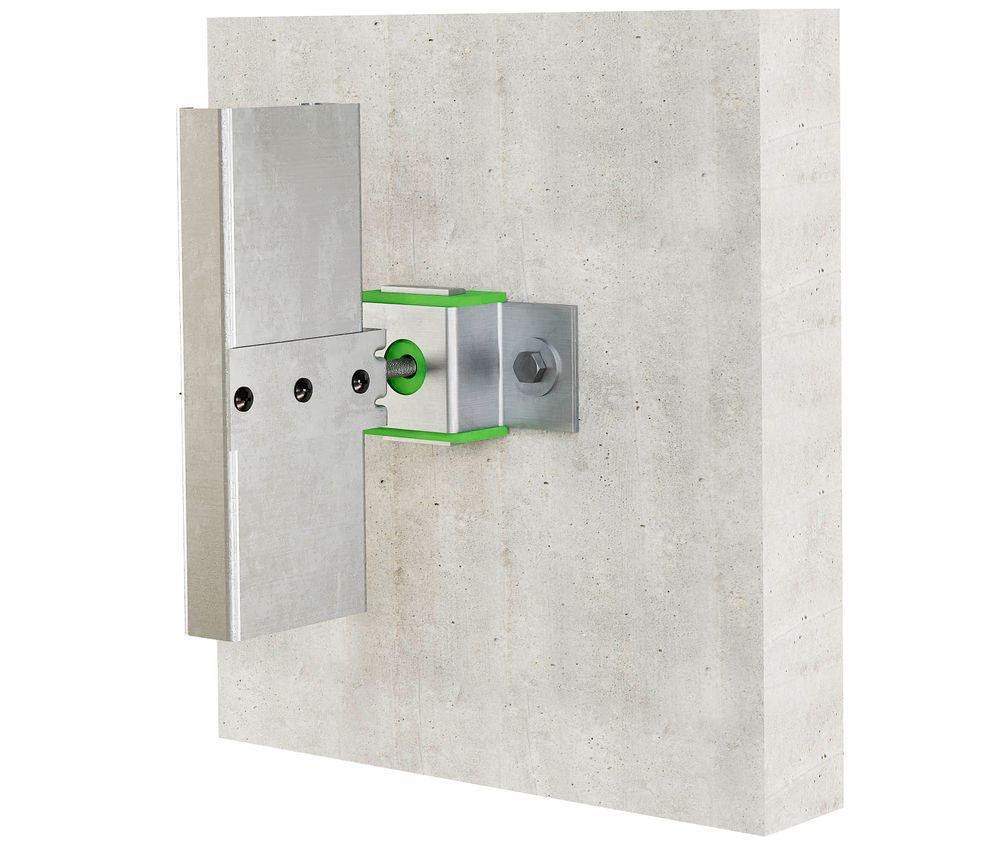
The EP + Sylomer® family is a range of acoustic wall ties for the floating suspension of soundproofed walls. Each tie provides an elastic connection between the wall assembly and the supporting structure — allowing the wall to float independently while the Sylomer® element prevents vibration and impact noise from bridging across. Six variants cover light-duty standpipe isolation through to high-load floating wall systems, all sharing a fail-safe metal housing design with CE and UKCA certification.
Floating Wall Principle
- A soundproofed wall achieves its acoustic performance by mass and by isolation — the wall assembly must not be rigidly connected to the surrounding structure at any point, or flanking paths will bypass its mass-based attenuation
- EP wall ties replace conventional rigid fixings — each tie provides a structurally adequate connection while introducing a Sylomer® elastic break that prevents vibration transmission
- Two fixing holes per tie attach to the backing structure; the elastic Sylomer® element sits between the tie body and the wall frame or board — every fixing point is isolated
- The steel housing is designed as a fail-safe — it limits maximum deflection under overload and prevents the Sylomer® element from being destroyed by impact or shock
Secondary Applications
- Acoustic isolation of vertical pipes and standpipes from walls and structures
- Isolation of lightweight ductwork requiring vibration decoupling at fixing points
Certifications
- CE and UKCA certified across the range — specified with confidence on commercial, education, and healthcare projects
- BIM models available for all variants — compatible with Revit and IFC workflows
- Fire and impact resistance suitable across the range
Variants
- Type B M6 (code 23701) — 30 kg max · M6 female insert · 0.167 kg
- Type B M8 (code 23720) — 30 kg max · M8 female insert · 0.167 kg
- Type A M6 (code 23703) — 30 kg max · M6 female insert · 0.163 kg
- Type A M8 (code 23702) — 30 kg max · M8 female insert · 0.163 kg
Selection Notes
- Type A and Type B refer to the profile geometry of the tie body — specify the type that suits the wall frame or board thickness of your assembly
- M6 vs M8 matches the threaded fixing used in the wall frame system — confirm against the frame manufacturer's specification
- Two-hole wall mounting provides stable, rattle-free attachment to the backing structure
Specification
- Code 23705 · Maximum load 30 kg · Weight 0.192 kg
- Male M6 metal insert — connects to the wall assembly side
- Welded L-nut — clips directly to the flange of a metal stud or channel profile without additional hardware
- Two-hole backing wall fixation as standard
When to Use EP 400
- Metal stud partition systems where the tie must clip to the stud profile rather than bolt through it
- Installations where access to the back face of the metal frame is not possible during tie installation
- Works in combination with Wall Up + Sylomer® for complete floating wall assemblies — installation guides available for the Wall Up + EP 400 configuration
Variants
- EP 500 + Sylomer s35 (code 23715) — 60 kg max · 0.141 kg · lower stiffness grade for lighter wall assemblies
- EP 500 + Sylomer s65 (code 23716) — 60 kg max · 0.147 kg · higher stiffness grade for heavier wall assemblies
Construction Features
- Two predrilled pins with simplified cut-to-length design — pins can be trimmed on site to suit different wall assembly depths without specialist tools
- Fire and impact-resistant construction throughout
- Sylomer® grade selection (s35 vs s65) allows the natural frequency to be optimised for the actual load per tie in the assembly
Typical Applications
- Heavier floating wall assemblies — double-board or multi-layer wall systems with higher board mass
- Commercial and institutional projects requiring acoustic wall test data (University of Deusto multi-sports facility reference available)
Variants
- EP 600 + Sylomer (code 23707) — 30 kg max · 0.24 kg · predrilled straight easy-cut pins
- EP 650 + Sylomer (code 23709) — 30 kg max · 0.24 kg · predrilled bent pins for angled installation
Pin Configuration Selection
- EP 600 straight pins: standard installation where the tie engages the wall board or frame face-on — pins trim to exact depth on site
- EP 650 bent pins: installations where the tie must engage the wall assembly at an angle, or where the wall geometry requires the pin to approach from the side
- Both variants carry identical load ratings and acoustic performance — selection is based purely on installation geometry
Variants
- EP 700 + Sylomer 15 (code 23727) — 15 kg max · 0.201 kg · lightest-load variant for slim wall assemblies
- EP 700 + Sylomer 30 (code 23711) — 30 kg max · 0.208 kg · CE + UKCA certified · standard floating wall load
- EP 700 + Sylomer 50 (code 23728) — 50 kg max · 0.208 kg · CE + UKCA certified · heavier multi-board assemblies
- EP 700 + Sylomer 75 (code 23712) — 75 kg max · 0.216 kg · CE + UKCA certified · maximum load in the EP range
Construction Features
- Two predrilled bent pins — factory formed for consistent installation depth and angle
- Fail-safe steel housing — prevents Sylomer® over-compression under impact or accidental overload
- BIM 3D drawings available for all four variants — essential for coordinating wall build-ups in model-based workflows
Selection
- Calculate the load per tie based on the total wall assembly weight divided by the number of fixing points — then select the EP 700 variant rated for that load
- Under-loading (using the 75 kg variant at 15 kg per tie) reduces isolation performance — correct load matching is essential
Specification
- Code 23724 · Weight 0.233 kg
- Fail-safe steel housing with overload-proof design
- Sylomer® element for vibration isolation and optimal acoustic performance
- Fire and impact resistant — suitable for demanding commercial applications
- BIM compatible — 3D CAD drawings available
Typical Applications
- Floating wall suspension where a larger contact footprint is required
- Acoustic isolation of vertical pipes at wall fixing points
- Lightweight ductwork isolation requiring a wider bearing area